Multilingual Content: Using AI to Localize Voice and Text in 150+ Languages
Reaching a global audience used to mean a translation vendor and a dubbing studio per market. Here's the AI-driven alternative.
7 min read · April 27, 2026
Localizing content used to scale linearly with the number of markets you wanted to reach - each new language meant a new translation vendor and, for audio or video, a new dubbing session. AI localization breaks that linear cost curve.
What AI localization actually covers
- Written translation that preserves tone, not just literal meaning
- Voiceover narration in a target language and regional accent
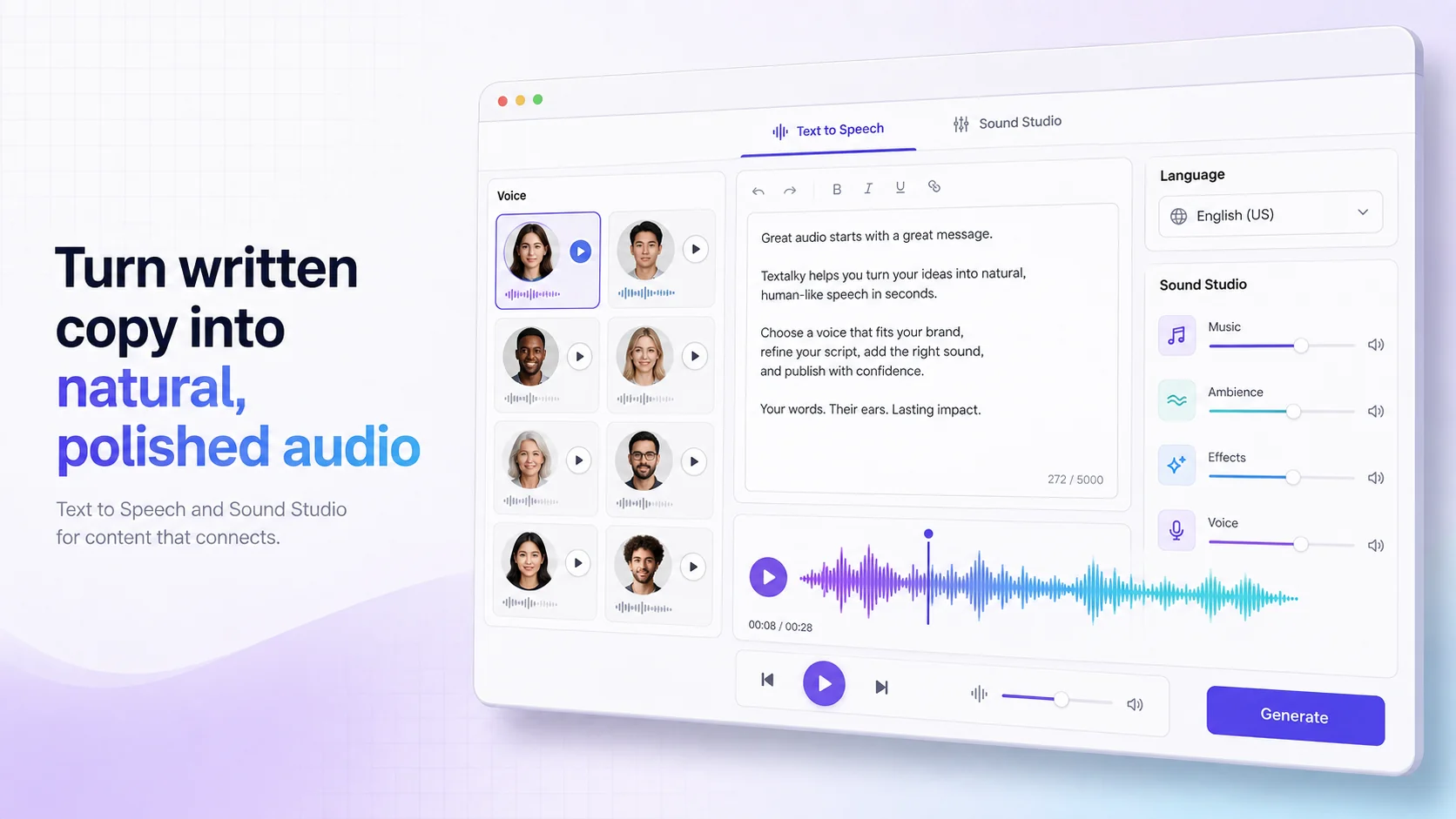
- Voice cloning that carries your own voice into a new language
- Transcription and subtitles for video content across markets
Where teams are using this today
Training teams localize e-learning courses into a dozen languages without a vendor. Podcasters narrate the same episode in several languages using their own cloned voice. Marketing teams adapt ad voiceover to a specific market's accent, not just a generic regional dialect.
“We localize training modules into a dozen languages without a translation vendor. What used to take weeks now takes an afternoon.”
What still needs a human review
Idioms, cultural references, and anything legally sensitive still benefit from a native speaker's review pass before publishing. Treat AI localization as a fast, high-quality first pass - not a substitute for a final check by someone fluent in the target market.
Reach a global audience faster
Localize voice and text into 150+ languages with Textalky's free plan.
Ready to try it yourself?
Create a free Textalky account - no credit card required - and put this into practice.
Start creating for free