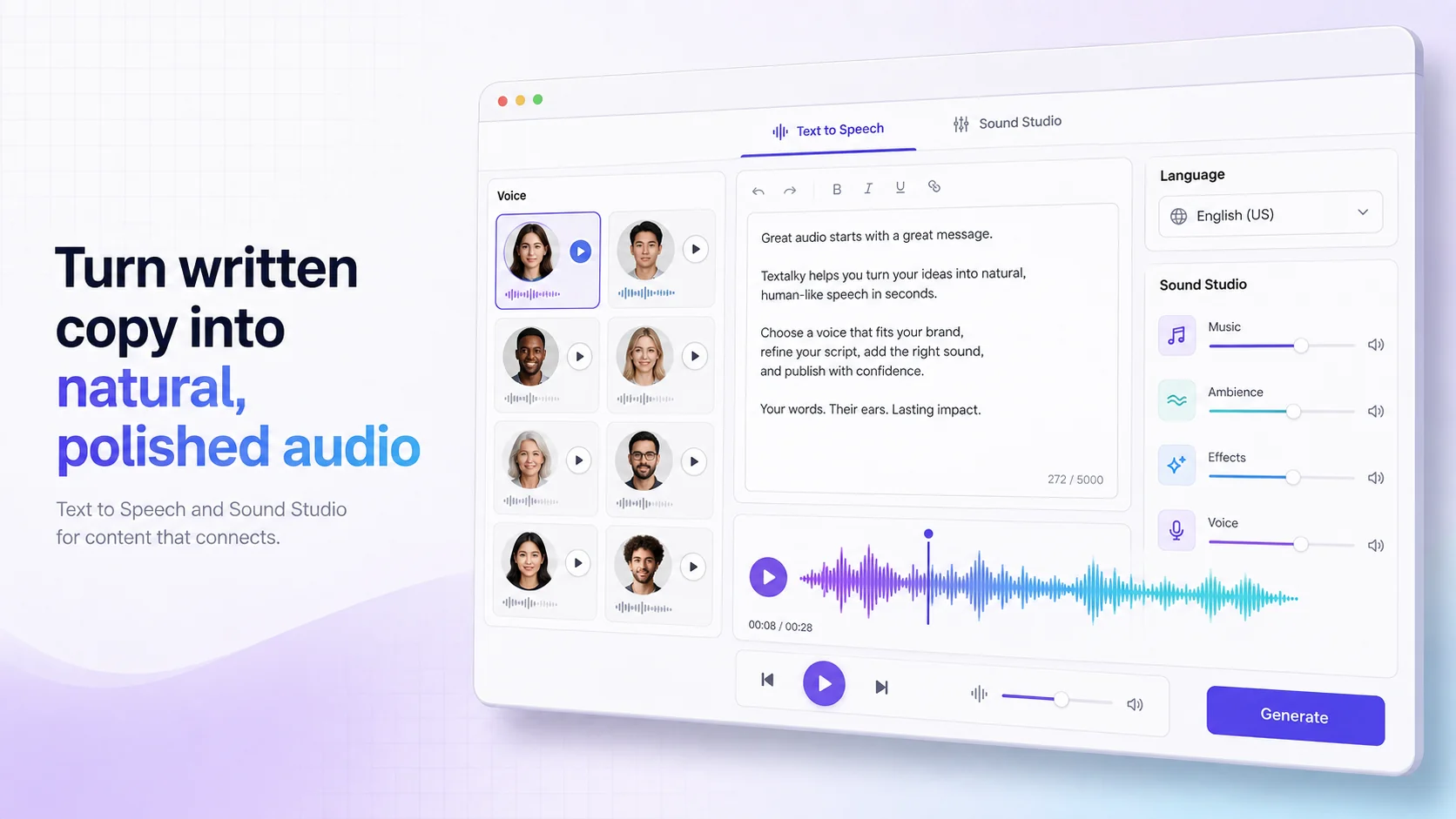
Realistic Text to Speech: Voices That Sound Truly Human
Tired of robotic AI voices? Learn how to find and use realistic text to speech that sounds genuinely human, transforming your audio content.
10 min read · September 4, 2026
The Search for Human-Sounding AI Voices
The quest for AI voices that don't sound like robots is a familiar struggle for content creators, audiobook producers, educators, and marketers. You know the sound: stilted, monotone, lacking any natural cadence or emotional inflection. It’s the kind of voice that pulls listeners out of your content, signaling artificiality and potentially undermining the credibility of your message. Whether you’re narrating an audiobook, developing an e-learning module, or crafting a marketing video, the quality of the voiceover is paramount. A robotic voice can instantly make even the most compelling content feel cheap and unengaging. This is why the search for realistic text to speech is so critical. You need voices that can carry emotion, convey nuance, and sound as natural as a human speaker, a topic explored further in guides like our AI text to speech overview. The good news is that AI voice technology has advanced significantly, moving beyond basic text-to-speech capabilities to offer truly human-like vocal performances.
What Makes a Text to Speech Voice 'Realistic'?
The difference between a basic text-to-speech (TTS) system and a truly realistic text to speech generator lies in a complex interplay of technical and qualitative factors. Basic TTS often relies on concatenating pre-recorded phonemes, resulting in that characteristic robotic cadence. Realistic AI voices, on the other hand, are built on sophisticated deep learning models that understand and replicate the subtle intricacies of human speech.
Key elements that contribute to a realistic AI voice include:
- Intonation and Prosody: Human speech isn't flat. We naturally vary our pitch, speed, and volume to emphasize words, convey emotion, and mark the end of sentences. Realistic AI voices mimic these natural patterns, making speech flow smoothly and sound conversational.
- Pacing and Rhythm: The speed at which someone speaks, and the pauses they insert, are crucial to comprehension and naturalness. Advanced AI can adjust pacing dynamically, slowing down for emphasis or speeding up slightly during less critical passages.
- Emotional Nuance: Conveying excitement, concern, curiosity, or calmness through voice is a hallmark of human communication. Top-tier AI voice generators can imbue speech with subtle emotional undertones, making narration more engaging and characters more believable.
- Pronunciation and Articulation: Beyond just pronouncing words correctly, realistic voices exhibit natural mouth movements and subtle variations in articulation that a purely synthetic voice would miss. This includes clear enunciation without sounding overly precise or mechanical.
- Breathing and Hesitations: While often subtle, natural breaths and even occasional, well-placed hesitations (like "um" or "uh," when appropriate for the context) can make an AI voice sound more human and less like a perfect machine.
- Clarity and Consistency: Even with all these nuances, the primary goal is clear communication. Realistic TTS ensures that every word is discernible and that the voice remains consistent in tone and quality throughout the duration of the audio.
These factors combine to create an experience that is not just audible, but genuinely listenable and engaging, moving far beyond the capabilities of simple text-to-speech.
Choosing the Right Realistic AI Voice
Selecting the ideal voice from a range of natural sounding text to speech options requires careful consideration of your specific project and audience. A voice that works perfectly for one application might be entirely unsuitable for another.
Here are key factors to consider:
- Accent and Dialect: Do you need a standard American accent, a British RP, or something more specific? Accents can significantly influence how your message is perceived. Consider your target audience and what they are accustomed to hearing.
- Gender and Age: While AI voices are becoming increasingly diverse, consider if a male or female voice is more appropriate for your content. Similarly, does the voice need to sound mature, youthful, or somewhere in between?
- Tone and Emotion: Some voices are naturally more authoritative, while others are warmer and more empathetic. Think about the primary emotion you want to convey. Is it excitement for a product launch, calm reassurance for an educational module, or a narrative tone for a story?
- Purpose of the Voiceover:
- Audiobooks: You’ll want a voice that can sustain long listening sessions, with good pacing, clear enunciation, and the ability to convey character and emotion. Consistency is key.
- Explainer Videos: A clear, friendly, and slightly energetic voice often works best to keep viewers engaged.
- Marketing Content: The voice should align with your brand's personality - professional, enthusiastic, trustworthy, etc.
- E-learning: A voice that is easy to understand, patient, and encouraging is ideal for educational purposes.
- Listen to Samples: Always listen to a variety of voice samples before making a decision. Many platforms offer previews. Pay attention to how the voice handles different types of sentences and punctuation.
- Trial and Error: Don't be afraid to experiment. Sometimes, a voice you wouldn't have initially considered can end up being the perfect fit after you hear it in context.
By carefully evaluating these elements, you can move beyond generic TTS and find a realistic text to speech voice that truly elevates your content.
Leveraging Realistic TTS for Different Content Types
The advancements in natural sounding text to speech technology open up a world of possibilities for creators across various fields. Moving beyond the limitations of robotic narration, high-quality AI voices can significantly enhance the production value and engagement of your content.
Here’s how:
- Audiobook Narration: Producing audiobooks traditionally requires hiring voice actors, which can be costly and time-consuming. Realistic AI voices offer a viable alternative, especially for independent authors or those on a tighter budget. With the right voice, you can create compelling narration that keeps listeners hooked, turning lengthy manuscripts into professional-sounding audiobooks.
- Engaging E-learning Modules: Educational content needs to be clear, concise, and engaging. Realistic AI voices can deliver complex information with natural intonation, making lessons more digestible and less monotonous. This is crucial for keeping learners motivated and improving retention. Platforms dedicated to creating e-learning modules can benefit immensely from high-quality voiceovers.
- Enhancing Marketing Videos: For explainer videos, product demos, or advertisements, a professional voiceover is essential. Realistic text to speech can provide a polished, human touch that builds trust and conveys your brand's message effectively. Instead of relying on costly studio time for every video, AI offers a scalable solution for consistent brand messaging, as discussed in our guide on AI voiceover for marketing ads.
- Producing Professional Podcast Segments: While many podcasts feature human hosts, there are many applications for AI voices, from intros and outros to sponsored ad reads or narrative segments within a show. High-quality AI voices can add a layer of professionalism and allow for more dynamic content creation within podcast segments and beyond.
- Customer Service and IVR Systems: For interactive voice response systems or automated customer service announcements, a pleasant and clear AI voice can significantly improve the user experience, making interactions less frustrating.
The key is to select a voice that matches the tone and purpose of your content. When AI voices sound truly human, they become a powerful tool for enriching any form of spoken-word media.
Beyond Narration: Advanced AI Voice Capabilities
The evolution of AI voice technology extends far beyond simply converting text to speech with natural intonation. Sophisticated tools now offer advanced capabilities that can further enhance audio production workflows and branding consistency.
One significant advancement is Voice Cloning. This technology allows you to create a digital replica of a specific human voice. Once cloned, this voice can be used to generate new audio content, ensuring absolute consistency in branding and tone across all your spoken-word materials. For businesses that rely heavily on a particular brand voice, or for creators who want to maintain their unique vocal identity across multiple projects without having to record everything themselves, voice cloning is a powerful solution. It means your signature sound can be applied to different scripts, from marketing messages to internal training materials, all generated from a single cloned voice profile.
Another critical capability is Voice Isolator. Background noise, room echo, or unwanted ambient sounds can plague audio recordings, forcing costly and time-consuming post-production cleanup. Voice Isolator uses AI to intelligently remove these distractions, isolating the primary voice track and leaving you with clean, studio-quality audio. This is invaluable for content recorded in less-than-ideal environments, such as home studios or on location. It ensures that your narration, dialogue, or any spoken content remains clear and professional, regardless of the recording conditions.
These advanced features move AI voice generation from a simple text-to-speech utility to a comprehensive audio production suite, offering unprecedented control and quality for creators.
Finding Your Perfect Voice: Tools and Considerations
The challenge of finding truly realistic text to speech is met by a growing landscape of AI tools. However, navigating this space can be complex, with many solutions focusing on just one aspect of audio creation. The real power comes from having integrated tools that work together.
Many creators find themselves juggling multiple subscriptions: one for writing, another for voiceovers, perhaps a third for image generation. This fragmentation can lead to inefficiencies and increased costs. An all-in-one studio, like Textalky, consolidates these diverse AI creative capabilities into a single platform. This means you can generate your script with AI writing tools, then immediately use advanced AI voice generators - including natural-sounding text-to-speech, voice cloning, and voice isolation - all within the same interface.
When evaluating tools, consider these points:
- Voice Quality: As discussed, listen carefully to samples. Do they sound natural? Do they offer a good range of emotions and accents?
- Tool Integration: How well do the voice tools integrate with other creative assets like AI writing or image generation? An integrated workflow saves time and reduces friction.
- Features: Does the platform offer advanced features like voice cloning or noise reduction if you need them?
- Ease of Use: Is the interface intuitive? Can you quickly find the voices and features you need?
- Pricing Structure: Look for transparent pricing that offers good value. While many tools offer subscription plans, some also provide exceptional one-time purchase options.
For creators looking to consolidate their AI tools and access a comprehensive suite of creative functionalities, comparing options is key. The AI Lifetime Pro deal from Textalky offers lifetime access to its complete AI creative studio for a single, one-time payment of $79. This includes a vast array of tools, from AI writing and voice generation to image and video creation, providing exceptional value for those looking to streamline their creative process.
Ultimately, finding your perfect voice involves understanding your needs, exploring the available technologies, and choosing a platform that empowers your creativity without unnecessary complexity or recurring expenses.
Frequently asked questions
What makes an AI text to speech voice sound realistic?
A realistic AI text to speech voice sounds human because it accurately replicates the nuances of human speech. This includes natural intonation and prosody (variations in pitch, rhythm, and stress), appropriate pacing, subtle emotional expressions, clear articulation, and even natural breathing sounds. Advanced AI models trained on vast amounts of human speech data are capable of generating these subtle, lifelike qualities, moving far beyond the robotic cadence of older TTS systems.
Can I use realistic AI voices for commercial projects?
Yes, generally you can use realistic AI voices generated by reputable platforms for commercial projects. Textalky, for instance, allows for commercial use of generated audio content under its standard plan terms. It's always crucial to review the specific terms of service for any AI voice tool you use. These terms will outline usage rights, any restrictions, and licensing details for both personal and commercial applications. Textalky’s AI Lifetime Pro deal, for example, grants users access to all tools for commercial use.
How do I choose the best realistic text to speech voice for my audiobook?
Choosing the best realistic text to speech voice for your audiobook involves considering several factors. First, listen to a wide range of voice samples to find one with a natural cadence and consistent quality that can sustain long listening periods. Consider the genre and tone of your audiobook; a voice that sounds warm and engaging might be perfect for a romance novel, while a more authoritative or dramatic voice might suit a thriller or non-fiction work. Pay attention to accents and dialects to match your target audience or the story's setting. Ultimately, the best voice will be one that enhances the narrative and immerses the listener without drawing attention to its artificial origin.
The quest for high-quality, human-sounding AI voices is no longer a futuristic dream, but a present-day reality for creators. By understanding what makes a voice realistic and choosing the right tools, you can significantly elevate your content. For those ready to explore a comprehensive solution that integrates advanced AI voice capabilities with writing, visual creation, and more, comparing platforms is a wise next step.
The AI Lifetime Pro deal offers lifetime access to Textalky's complete AI creative studio for a single, one-time payment of $79. This includes a powerful suite of AI tools, including realistic text-to-speech, voice cloning, and voice isolation, alongside writing, image, and video generation. It represents a significant opportunity to equip yourself with a versatile creative arsenal.
We encourage you to explore the possibilities and find the voice that best tells your story. Discover the full range of tools and see how they can transform your content creation workflow.
Ready to try it yourself?
Create a free Textalky account - no credit card required - and put this into practice.
Start creating for free