Master Voice Cloning: Your Guide to AI Voice Synthesis
Unlock the potential of AI voice cloning. This guide explores the technology, its applications, and how to get started with powerful voice synthesis tools.
8 min read · September 4, 2026
The need for unique, consistent, and high-quality voiceovers for your projects is a constant challenge. Human voice talent can be expensive, time consuming to find, and their availability might not always align with your production schedule. Beyond that, you might simply want to explore advanced audio manipulation and personalization. This is where voice cloning software emerges as a powerful and increasingly accessible tool for creators.
What is Voice Cloning Software?
Voice cloning software uses artificial intelligence to create a digital replica of a specific human voice. Unlike standard text-to-speech (TTS) systems that generate generic, robotic-sounding voices, voice cloning aims to capture the unique nuances, pitch, tone, and speaking style of an individual. The underlying technology typically involves deep learning models, trained on a significant amount of audio data from the target voice. These models learn the intricate patterns and characteristics that make a voice distinct, allowing them to generate new speech that sounds remarkably similar to the original.
How Does AI Voice Cloning Work?
The process of creating a cloned voice generally involves training an AI model with audio samples of the voice you wish to replicate. The more high-quality data you provide, the more accurate and natural the cloned voice will be.
Here's a simplified breakdown of the process:
- Data Collection: You'll need clear audio recordings of the target voice. This could be existing recordings or newly made samples. The ideal recordings are clean, without background noise, and feature the speaker talking in a consistent tone and pace. The type of data needed varies; some systems might require just a few minutes, while others benefit from hours of speech.
- Model Training: The collected audio data is fed into a specialized AI model. This model analyzes the vocal characteristics, such as pitch, timbre, accent, and intonation. Through complex algorithms, it learns to predict and reproduce these features.
- Synthesis: Once trained, the AI model can generate new speech based on text input. You type the words you want the cloned voice to say, and the AI synthesizes the audio, mimicking the original speaker's voice.
The output quality can range from good to astonishingly realistic, depending on the software, the quality and quantity of training data, and the sophistication of the AI model. For a step-by-step guide to cloning your voice, explore resources on how to clone your voice with AI.
Key Applications of Voice Cloning
The ability to generate custom voiceovers opens up a vast array of creative and practical applications:
- Personalized Content Creation: Imagine creating marketing messages, video intros, or social media content that always uses your brand's established voice, even if different people record it. This consistency builds brand recognition and trust.
- Audiobook Narration: For authors or publishers, voice cloning can provide a consistent narrator for entire book series, ensuring a uniform listening experience. It can also be used to re-record sections with specific intonation or to create audio versions of content not originally intended for spoken word.
- Virtual Assistants and Chatbots: Cloned voices can give virtual assistants and customer service chatbots a more human and approachable persona, improving user experience and engagement.
- Accessibility Tools: Voice cloning can empower individuals who have lost their voice due to illness or injury to communicate using a synthesized version of their own voice. It can also be used to create personalized audio descriptions for visually impaired users.
- Character Voices for Games and Animation: Game developers and animators can use voice cloning to create unique character voices efficiently, especially for large casts or when needing multiple takes with consistent emotion.
- Multilingual Content: By cloning a voice and then using AI translation and synthesis, you can produce localized content across many languages, maintaining the original voice's character and tone for a truly global reach. This is especially useful for creating multilingual content.
- Educational Content: Creating engaging e-learning modules or tutorials with a familiar and consistent voice can significantly improve learner retention and comprehension.
Choosing the Right Voice Cloning Software
Selecting the right voice cloning software involves considering several crucial factors to ensure it meets your needs and ethical standards:
- Ease of Use: The interface should be intuitive, especially if you're not an audio engineering expert. Look for tools that simplify the data upload and training process.
- Voice Quality: Listen to samples or test the software if possible. The cloned voice should sound natural, clear, and free of artifacts. Consider the range of emotions and inflections the AI can replicate.
- Data Requirements: Understand how much audio data is needed for training. Some tools require extensive libraries, while others can produce good results with less.
- Ethical Safeguards: Reputable software providers will have clear policies on consent and responsible use. Ensure the platform prioritizes ethical practices.
- Integration with Other Creative Tools: Does the software integrate with your existing workflow? For instance, can you easily export the cloned audio to video editing software or a podcast production suite? An all-in-one studio approach can be very beneficial here.
- Cost and Quotas: Pricing models vary. Some offer one-time purchases, while others are subscription-based with monthly limits on usage. Compare these against your expected volume of work. For detailed comparisons, visit the pricing page.
Ethical Considerations and Best Practices
Voice cloning technology, while powerful, carries significant ethical responsibilities. The ability to perfectly mimic someone's voice raises concerns about potential misuse, such as creating deepfakes for misinformation or impersonation.
Therefore, it is paramount to adhere to ethical guidelines:
- Consent is Key: Always obtain explicit, informed consent from the individual whose voice you intend to clone. This is not just an ethical imperative but often a legal requirement.
- Transparency: Be transparent about when a voice is AI-generated. Clearly label AI-synthesized content, especially in sensitive contexts like news or public announcements.
- Responsible Deployment: Use voice cloning for legitimate and beneficial purposes. Avoid creating content that could deceive, harm, or infringe on privacy.
- Security: Protect your cloned voice data and the AI models. Unauthorized access could lead to malicious use.
Adhering to these best practices ensures that voice cloning technology is used as a force for good, enhancing creativity and accessibility without compromising trust or safety.
Getting Started with Textalky's AI Voice Tools
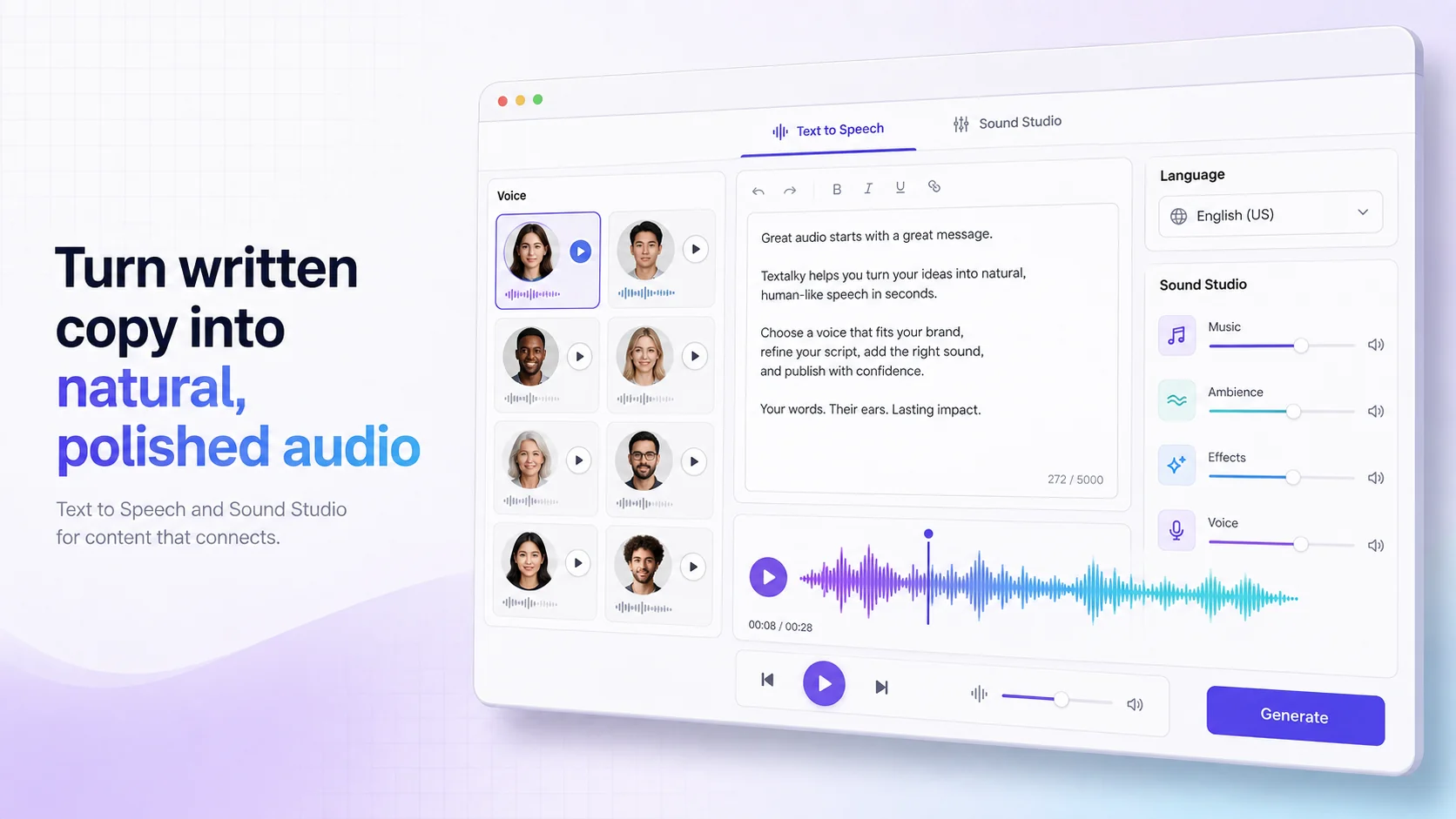
Navigating the world of AI voice generation can seem complex, but an all-in-one creative studio like Textalky simplifies the process immensely. Textalky brings together a comprehensive suite of AI-powered tools, including sophisticated voice cloning capabilities, within a single, user-friendly interface. This means you don't need to juggle multiple subscriptions for different audio tasks.
With Textalky, you can access features like AI Voiceover, Voice Cloning, Transcribe, Voice Isolator all under one roof. Whether you're looking to replicate a specific voice, generate natural-sounding narration from text, transcribe existing audio, or clean up background noise, Textalky provides the tools you need.
To explore the full range of Textalky's offerings and find a plan that suits your needs, you can view their different plans. For those looking for exceptional value and lifetime access to a vast array of AI tools, the AI Lifetime Pro offer presents a compelling opportunity. This one-time purchase provides ongoing access to Textalky's features, allowing you to build and scale your creative projects without recurring subscription fees.
Beyond Cloning: Textalky's Full AI Voice Suite
While voice cloning is a standout feature, Textalky’s capabilities extend far beyond replicating specific voices. The platform offers a comprehensive suite of AI audio tools designed to support every facet of your audio production needs.
- AI Voiceover: Transform any text into natural-sounding speech using a vast library of over 50 studio-grade voices in more than 150 languages and accents. This is perfect for generating narration for videos, presentations, or any content requiring spoken word.
- AI Transcribe: Quickly and accurately convert audio and video files into text. This is invaluable for creating subtitles, generating transcripts for interviews, or repurposing audio content.
- AI Voice Isolator: This powerful tool allows you to remove unwanted background noise from your audio recordings. Whether it's street sounds, ambient hum, or echo, the AI Voice Isolator helps clean up your audio, making it sound professional. You can learn more about its benefits in this article on the AI Voice Isolator.
- AI Music: Generate original music tracks for your projects, setting the perfect mood without copyright concerns.
- Sound Studio: Edit, merge, mix, and master your audio with a suite of professional editing tools, all within Textalky.
By integrating these diverse AI audio features, Textalky empowers creators to produce high-quality, professional audio content efficiently and effectively, all within one integrated platform.
Frequently asked questions
What is voice cloning software?
Voice cloning software is an AI-powered tool that creates a digital replica of a specific human voice. It analyzes audio samples of a target voice to learn its unique characteristics, such as pitch, tone, and speaking style, enabling it to generate new speech that sounds like the original speaker.
How can I legally clone my voice?
You can legally clone your voice by obtaining explicit, informed consent from the individual whose voice you wish to replicate. This ensures you have the necessary permission and are adhering to ethical and legal standards. Always use voice cloning technology responsibly and transparently.
What are the main uses for cloned AI voices?
Cloned AI voices have numerous applications, including creating personalized marketing content, narrating audiobooks with a consistent voice, developing more human-like virtual assistants and chatbots, enhancing accessibility tools for individuals with speech impairments, and generating unique character voices for games and animation.
Conclusion
Voice cloning software has moved from a futuristic concept to a practical, accessible tool for creators. It addresses the persistent need for unique, consistent, and high-quality voiceovers, offering solutions for everything from audiobook production to personalized marketing. By understanding how the technology works, exploring its diverse applications, and prioritizing ethical considerations, you can effectively harness its power.
Textalky stands out as a comprehensive solution, integrating voice cloning with a wide array of other AI creative tools. This all-in-one approach streamlines your workflow and makes advanced audio production more attainable than ever.
If you're ready to explore the possibilities of AI-driven voice creation and a full spectrum of creative tools, consider taking advantage of the current AI Lifetime Pro offer. This is a unique opportunity to gain lifetime access to Textalky's expanding suite of features for a single, one-time payment. Discover how Textalky can transform your creative projects by visiting the AI Lifetime Pro deal page today.
Ready to try it yourself?
Create a free Textalky account - no credit card required - and put this into practice.
Start creating for free