Beyond Basic TTS: Crafting Realistic Voices with AI Text to Speech
Explore the evolution of AI text to speech, moving beyond robotic outputs to offer natural, engaging voices. Learn how to select and implement these advanced tools for your content.
10 min read · September 4, 2026
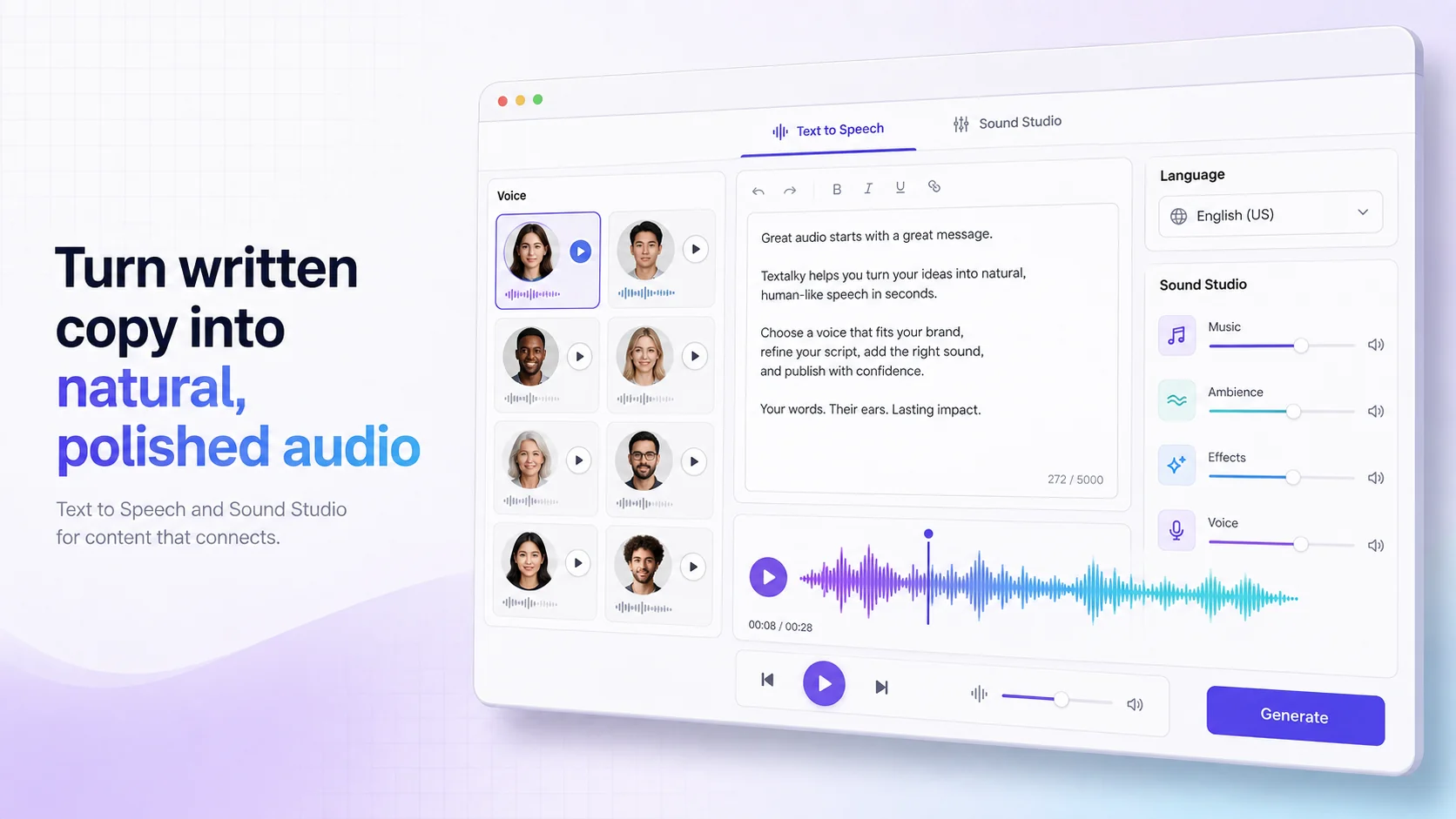
The journey from robotic pronouncements to genuinely human-sounding narration has been a swift one for AI text to speech. Early iterations of text to speech, or TTS, sounded like they were read by a monotone robot, making them unsuitable for anything beyond basic alerts or accessibility features. This limitation meant that many creators and businesses shied away from using TTS for important audio content, fearing it would undermine their professionalism.
However, the technology has advanced dramatically. Behind the scenes, breakthroughs in machine learning, particularly deep learning and neural networks, have allowed AI models to process and generate speech in ways that mimic human vocal patterns far more closely. These sophisticated systems analyze vast datasets of human speech, learning the subtle nuances of pronunciation, intonation, rhythm, and even emotional expression. The result is an AI voiceover capability that can now be a powerful tool for engaging audiences, not a barrier to it. The development of AI AI Voiceover has moved from a novelty to a crucial component in modern content creation.
What Makes an AI Voice Sound 'Real'?
The difference between a stilted, robotic TTS output and a natural, engaging AI voice lies in several key characteristics. Achieving realism requires more than just converting text to sound; it involves replicating the complexities of human vocal delivery.
- Natural Intonation and Inflection: Human speech is rarely flat. We naturally raise our pitch to ask questions, lower it for emphasis, and vary our tone to convey meaning and emotion. Advanced AI voices can replicate these subtle shifts, making the speech flow more like a conversation and less like a recitation.
- Emotional Range: Beyond basic intonation, human speech carries emotion. Whether it's excitement, concern, or authority, our voices convey feelings. Modern AI models are trained to recognize and reproduce these emotional cues, allowing for narration that can sound genuinely happy, serious, or persuasive.
- Proper Pronunciation and Articulation: Even minor mispronunciations can break the illusion of realism. High-quality AI voices possess excellent articulation, ensuring that every word is clear and correctly pronounced. This includes handling complex words, foreign names, and technical jargon with accuracy.
- Pacing and Rhythm: The speed at which someone speaks, the pauses they take, and the rhythm of their sentences all contribute to naturalness. AI voices can be programmed to adhere to specific pacing, using pauses for dramatic effect or to allow listeners to absorb information, mirroring human conversational flow.
- Accent Variety: Humans speak with a vast array of accents from different regions and countries. The availability of diverse accents in AI voices allows creators to choose a voice that best fits their target audience and brand identity, adding another layer of authenticity. Textalky offers 50+ studio-grade voices that cover a wide spectrum of these characteristics.
When these elements combine effectively, the resulting AI-generated speech becomes nearly indistinguishable from human narration, significantly enhancing listener engagement and comprehension.
Choosing the Right AI Voice for Your Project
Selecting the perfect AI voice is crucial for ensuring your audio content resonates with your audience. It’s not simply a matter of picking the first one you hear; thoughtful consideration is key.
Consider Your Project Type: The intended use of the audio will heavily influence your choice.
- Narration for Videos or Podcasts: You might opt for a warm, friendly, or authoritative voice that can hold listener attention for extended periods.
- E-learning Modules: A clear, articulate, and perhaps slightly more formal voice can aid comprehension and focus.
- Marketing and Advertising: A voice that conveys energy, excitement, or trust is often ideal, depending on the product or service.
- Audiobooks: A voice with a broad emotional range and consistent pacing is essential for bringing characters and narrative to life.
Determine the Desired Tone: What feeling do you want to evoke?
- Professional and Authoritative: A deeper, measured voice with clear enunciation.
- Friendly and Approachable: A lighter, warmer tone.
- Energetic and Enthusiastic: A more upbeat cadence and brighter pitch.
- Calm and Soothing: A gentle, steady delivery.
Understand Your Audience: Who are you trying to reach? Consider demographics, cultural background, and their likely expectations. A voice that appeals to a younger audience might differ from one that resonates with a professional business audience. Offering a variety of accents can also broaden appeal and increase relatability.
Listen to Samples: Most AI voice platforms provide samples of their available voices. Take the time to listen to various options, paying attention to how they handle different types of sentences and emotions. Some tools even allow you to input your own text to hear how a specific voice reads it.
Explore Language and Accent Options: If your content needs to reach a global audience, the availability of multiple languages and accents is paramount. Look for platforms that offer a wide selection, ensuring you can find the right fit for localization efforts.
By carefully considering these factors, you can move beyond simply generating audio and instead craft a compelling vocal experience that elevates your content.
Advanced Techniques for Enhancing AI Narration
Once you've chosen a voice, there are further steps you can take to refine the AI-generated speech and make it truly exceptional. These advanced techniques allow for granular control over the audio output, ensuring it meets your precise creative vision.
Leveraging SSML (Speech Synthesis Markup Language): SSML is a markup language that provides developers and creators with fine-grained control over text to speech output. Instead of relying solely on the AI's default interpretation, you can use SSML tags to dictate specific vocal behaviors. This includes:
- Pronunciation: You can specify how certain words or acronyms should be pronounced, preventing misinterpretations. For example, you could ensure "AI" is read as letters rather than sounding like "aye."
- Pauses: Control the duration and placement of pauses to improve clarity, create dramatic effect, or mimic natural speech patterns.
- Emphasis: Use SSML to emphasize specific words or phrases, guiding the listener's attention and conveying stronger meaning.
- Pitch and Rate: Adjust the pitch or speaking rate of specific words or sentences to add nuance or convey emotion.
- Audio Breaks: Insert breaks for breaths or silences.
Using SSML allows you to transform a standard TTS output into a performance, making the narration much more dynamic and engaging.
Utilizing a Sound Studio for Mixing and Mastering: Even the most realistic AI voice can benefit from professional audio post-production. A dedicated Sound Studio allows you to:
- Adjust Volume Levels: Ensure the voiceover is at an appropriate volume relative to any background music or sound effects.
- Apply Equalization (EQ): Fine-tune the frequency balance of the voice to make it clearer, warmer, or more present.
- Add Compression: Even out the volume dynamics, making quieter parts louder and louder parts softer, resulting in a more consistent listening experience.
- Reduce Background Noise: If any unwanted noise is present, studio tools can help clean it up.
- Mastering: The final stage of audio production, where the overall sound is optimized for playback across various devices and platforms.
By combining the power of SSML for precise vocal control with the polish of a sound studio for professional mixing and mastering, you can elevate AI-generated narration to a truly professional standard.
Use Cases for Realistic AI Voices
The capabilities of modern AI text to speech have opened up a wide array of applications where natural-sounding narration is not just a bonus, but a necessity. These advanced voices are transforming how content is created and consumed across various industries.
- Professional Podcasting: Beyond narration, AI voices can be used for intros, outros, advertisements, and even creating character voices for fictional segments. The ability to generate high-quality audio quickly and affordably makes it an attractive option for podcasters looking to scale their production. Tools like Textalky offer specialized podcast scripting, narration and mastering capabilities.
- E-learning Modules: Creating engaging educational content requires clear, consistent narration. Realistic AI voices can make online courses, tutorials, and training materials more accessible and enjoyable for learners. Textalky provides solutions specifically for e-learning modules.
- Marketing and Advertising: Catchy, persuasive voiceovers are essential for commercials and promotional videos. AI voices can deliver compelling ad copy that captures attention and drives conversions. Exploring AI Voiceover for Marketing: Boosting Ad Conversion can reveal the potential.
- Audiobooks: The demand for audiobooks continues to grow. While human narrators remain a preference for many, AI voices offer a viable and cost-effective alternative for self-published authors or those looking to produce a large volume of content.
- Virtual Assistants and Chatbots: For more sophisticated customer service bots or interactive virtual assistants, natural-sounding voices are crucial for a positive user experience. They make interactions feel more human and less robotic.
- Multilingual Content Localization: Businesses looking to expand globally can use AI voices to translate and narrate their content into numerous languages. This allows for rapid and consistent localization, reaching a wider audience. Textalky’s Multilingual Content: Using AI to Localize Voice and Text in 150+ Languages guide details this process.
- Accessibility Features: For websites, applications, and digital content, AI TTS provides an essential service for individuals with visual impairments or reading difficulties, ensuring that information is accessible to everyone.
The versatility of these advanced AI voices means they are no longer a niche technology but a fundamental tool for anyone looking to create impactful audio content.
Integrating AI Voices into Your Workflow
Incorporating advanced AI text to speech capabilities into your content creation process can significantly streamline production and enhance the quality of your audio output. The most effective way to do this is by leveraging an integrated platform, rather than piecing together various separate tools.
Using an all-in-one AI studio like Textalky means that all your creative needs - from writing and voice generation to image and video creation - reside within a single interface. This offers several key advantages:
- Efficiency: Instead of managing multiple subscriptions, logging into different platforms, and exporting/importing files between them, everything is accessible from one dashboard. This saves considerable time and reduces the potential for workflow friction.
- Consistency: When AI voice generation is part of the same suite as your writing tools, maintaining a consistent tone and style across your content becomes easier. You can draft your script, select the perfect AI voice, and generate narration without leaving the application.
- Cost-Effectiveness: Subscribing to multiple specialized AI tools can quickly become expensive. An all-in-one solution often provides access to a broader range of features for a single, predictable fee, which can be significantly more economical.
- Streamlined Collaboration: If you work with a team, a unified platform simplifies project management and asset sharing, ensuring everyone is working with the same tools and resources.
By adopting an integrated approach, you can harness the power of realistic AI voices more effectively, making them a seamless and powerful addition to your overall content strategy.
Frequently asked questions
What is the difference between basic TTS and advanced AI voices?
Basic TTS, often referred to as concatenative or parametric synthesis, typically relies on pre-recorded speech segments or statistical models that generate very predictable, often robotic-sounding output. It lacks natural intonation, emotional range, and dynamic pacing. Advanced AI voices, on the other hand, use deep learning and neural networks trained on vast amounts of human speech data. This allows them to produce speech that mimics human vocal patterns with remarkable accuracy, including natural inflection, emotional expression, varied pacing, and clear pronunciation, making them sound significantly more human and engaging.
How can I ensure my AI voiceover sounds natural and engaging?
Ensuring naturalness involves several steps. First, choose a voice that matches the tone and purpose of your content, listening carefully to samples. Utilize advanced features like SSML (Speech Synthesis Markup Language) to control pronunciation, pacing, emphasis, and intonation precisely. Finally, employ sound studio tools for mixing and mastering to adjust volume levels, apply EQ, and ensure the audio is polished and professional, especially when combined with music or sound effects.
Can AI voices be used for commercial purposes like marketing ads?
Yes, absolutely. Realistic AI voices are widely used for commercial purposes, including marketing ads, promotional videos, corporate explainers, and product demonstrations. Their ability to deliver clear, engaging, and emotionally resonant messages makes them highly effective for capturing audience attention and conveying marketing messages. Always check the specific licensing terms of the AI voice provider to ensure commercial use is permitted.
Textalky: Your Complete AI Creative Studio
The evolution of AI text to speech has brought us to a point where natural, engaging narration is accessible to everyone. From crafting compelling podcast episodes and informative e-learning modules to producing professional marketing ads and localizing content for a global audience, realistic AI voices are a transformative tool.
For creators and businesses looking to integrate these advanced capabilities without the complexity and cost of managing multiple subscriptions, an all-in-one solution is ideal. Textalky combines a comprehensive suite of AI creative tools, including advanced AI voiceover, writing, image, and video generation, into a single, intuitive platform.
If you're ready to explore the power of AI for your content creation, consider Textalky's current featured offer: the AI Lifetime Pro deal. This offers lifetime access to a vast array of tools for a single one-time payment, providing incredible value for creators looking to produce high-quality audio and visual content efficiently.
To see how Textalky can fit into your workflow and explore all available plans, visit Textalky's pricing page.
Ready to try it yourself?
Create a free Textalky account - no credit card required - and put this into practice.
Start creating for free