Is AI Voice Cloning Legal? Understanding the Ethics and Legality
AI voice cloning offers incredible creative possibilities, but is it legal? This guide unpacks the ethical and legal considerations you need to know.
10 min read · September 4, 2026
You’ve seen the headlines, perhaps experimented with the technology, and now you’re wondering: can I legally and ethically clone a voice using AI? The potential for AI voice cloning is immense, opening doors for creative projects, personalized content, and accessibility tools. Yet, it also raises significant questions about consent, intellectual property, and the very real possibility of misuse. Navigating this emerging landscape requires understanding both the current legal framework and the ethical considerations that guide responsible use.
This article demystifies the legal and ethical boundaries of AI voice cloning, focusing on what you, as a creator, marketer, or enthusiast, need to know to use this powerful technology responsibly.
What is AI Voice Cloning?
At its core, AI voice cloning is a sophisticated process that uses artificial intelligence to replicate a specific person's voice. By analyzing a sample of a person's speech, AI algorithms can learn the unique characteristics of their vocal patterns, tone, pitch, and cadence. This learned data can then be used to generate new speech in that person's voice, saying anything the user inputs as text.
Tools like Textalky's AI Voice Cloning feature allow users to upload audio samples and generate a digital replica. This technology has numerous legitimate applications, from creating personalized audiobooks to developing realistic virtual assistants. For those interested in exploring this further, a guide on how to clone your voice with AI can provide a practical starting point. However, the ease with which voices can be duplicated also necessitates a deep understanding of the legal and ethical implications.
The Legal Landscape of AI Voice Cloning
The legal framework surrounding AI voice cloning is still developing, making it a complex area to navigate. Unlike established technologies, there isn't a single, universally applied law that governs every aspect of voice cloning. Instead, several existing legal principles come into play, creating a nuanced picture.
One of the most significant legal considerations is consent. In most jurisdictions, using someone's likeness or voice for commercial purposes without their explicit permission can lead to legal challenges. This is particularly true if the cloned voice is used in a way that could mislead the public or infringe on an individual's rights.
Intellectual property law, specifically copyright, also plays a role. While a voice itself might not be copyrightable in the same way a song or a book is, the specific performance captured in an audio sample could be. Unauthorized use of a copyrighted performance to train an AI model could potentially lead to infringement claims.
Furthermore, laws related to defamation, privacy, and right of publicity can be relevant. If a cloned voice is used to spread false information, impersonate someone in a damaging way, or exploit their public persona without consent, legal action could follow.
The challenge lies in the fact that laws were created before the advent of sophisticated AI voice cloning. Legislators and courts are still grappling with how to apply these existing laws to new technological capabilities. This means the legal landscape can vary significantly depending on your location and the specific context of the voice cloning and its use.
Ethical Considerations: Beyond the Law
Beyond the strict letter of the law, a robust set of ethical considerations surrounds AI voice cloning. These principles guide us on what is right and just, even when the law is silent or ambiguous.
Perhaps the most pressing ethical concern is the potential for deepfakes. AI voice cloning can be used to create highly convincing audio impersonations, which can then be used to spread misinformation, manipulate public opinion, or create fraudulent content. Imagine a cloned voice being used to spread false news or create a fake confession. The potential for harm is significant.
Impersonation is another major ethical pitfall. Using a cloned voice to pretend to be someone else, whether for malicious intent or simply to deceive, erodes trust and can have severe consequences for the individual being impersonated and for society's ability to discern truth from falsehood.
Transparency and consent are paramount ethical pillars. It is ethically imperative to be upfront about the use of AI voice technology, especially when cloning a specific individual's voice. Without explicit, informed consent from the voice owner, using their cloned voice is not only legally risky but also ethically questionable. This respect for individual autonomy and ownership of one's voice is a cornerstone of responsible AI deployment.
The ethical use of AI voice cloning requires a proactive approach, prioritizing honesty, respect for individuals, and a commitment to avoiding harm.
Consent is Key: When is Voice Cloning Permissible?
The answer to whether AI voice cloning is permissible often boils down to one crucial factor: consent. For any use of AI voice cloning technology that involves replicating a specific person's voice, obtaining their explicit, informed consent is not just recommended, it is essential.
This means the individual whose voice is being cloned must clearly understand:
- That their voice is being cloned.
- How the cloned voice will be used.
- Where and by whom it will be used.
- The duration of its intended use.
Verbal consent might be sufficient in some informal contexts, but for commercial or public-facing applications, written consent is always the safest and most advisable approach. This documentation serves as proof that permission was granted, protecting both the user and the individual whose voice is being replicated.
Using a cloned voice without permission, even if you believe it won't cause harm, opens the door to legal challenges and ethical breaches. Always err on the side of caution and ensure you have clear, unambiguous consent before proceeding.
Copyright and Intellectual Property in AI Voices
The intersection of AI voice cloning and copyright law presents a complex scenario. While a person's natural speaking voice is generally not protected by copyright, the specific audio recordings of that voice can be. If you train an AI model on copyrighted audio material without proper licensing or permission, you could be infringing on existing intellectual property rights.
Consider a scenario where a popular podcast host's voice is cloned. If the AI model was trained on full episodes of their podcast, which are protected by copyright, the creators of that podcast could potentially claim that their copyrighted work was used without authorization.
Similarly, if a voice actor performs a script, that specific performance could be considered a copyrighted work. Using that performance to train an AI voice model without permission could lead to legal issues.
The current legal interpretation is that AI-generated speech, while created using AI, may not automatically fall under copyright protection in the same way as human-created works. However, the underlying data used to train the AI model is where copyright concerns often arise. Creators must be diligent in ensuring that the audio data used for voice cloning is either their own original work, is in the public domain, or has been licensed for such use.
Risks of Unauthorized Voice Cloning
The repercussions of using a cloned voice without proper authorization can be severe, extending beyond potential legal battles.
Legal Repercussions: Depending on the jurisdiction and the nature of the misuse, unauthorized voice cloning can lead to lawsuits for:
- Infringement of the right of publicity.
- Breach of copyright.
- Defamation.
- Misappropriation of likeness.
- Violation of privacy laws.
These lawsuits can result in significant financial penalties, including damages awarded to the affected individual, legal fees, and court-ordered injunctions to cease the unauthorized use.
Reputational Damage: Beyond legal liabilities, unauthorized voice cloning can inflict substantial damage to an individual's or a company's reputation. Being perceived as someone who disregards consent, intellectual property, or engages in deceptive practices can erode trust with customers, partners, and the public. This damage can be long-lasting and difficult to repair.
Ethical Stigma: Even if legal action is not pursued, the ethical implications of unauthorized voice cloning can lead to public outcry and social condemnation. In an era where transparency and ethical conduct are increasingly valued, such actions can lead to a significant loss of goodwill.
It is always prudent to assume that using someone's voice without their explicit consent carries substantial risks.
Responsible AI Voice Cloning with Textalky
At Textalky, we are committed to fostering a responsible ecosystem for AI-powered creativity. Our suite of tools, including AI Voice Cloning, is designed with ethical considerations and user responsibility at the forefront.
We understand that powerful technology demands careful stewardship. Textalky's AI Voice Cloning feature is intended for legitimate creative and professional applications, such as developing unique character voices for content, creating personalized audio experiences, or enabling accessibility features. We emphasize that users must adhere to all applicable laws and ethical guidelines, which includes securing explicit consent from any individual whose voice they intend to clone.
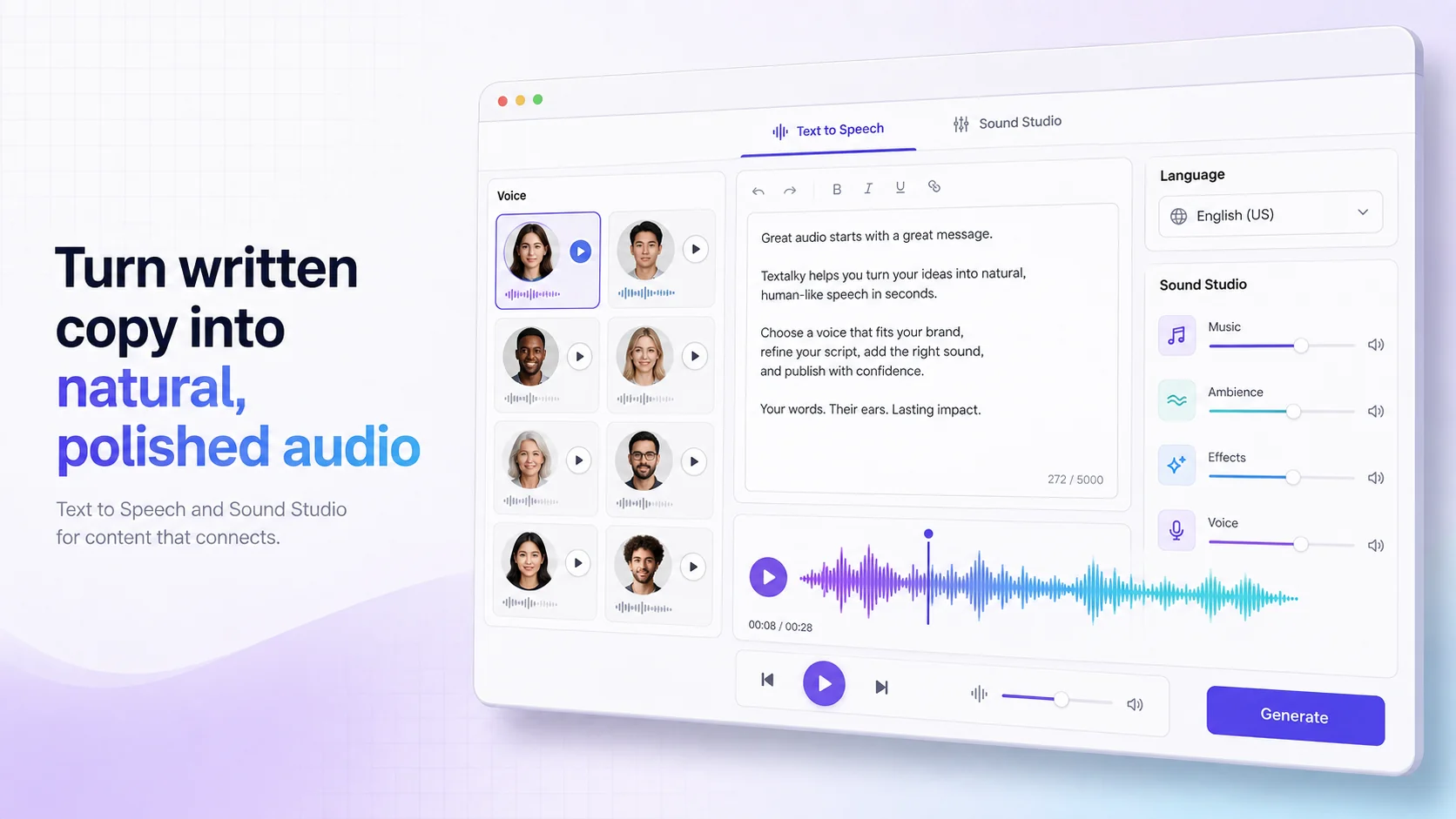
Our platform also offers a comprehensive suite of audio tools, including AI Voiceover for generating narration in various voices and accents, and a Sound Studio for editing and mastering audio. These tools, alongside voice cloning, empower creators to produce high-quality audio content for diverse needs, from engaging marketing materials like AI Voiceover for Marketing to immersive storytelling.
For creators looking to maximize their creative potential with a single, integrated platform, exploring Textalky's offerings is a worthwhile endeavor. We encourage creators to consider the AI Lifetime Pro deal](/ai-lifetime-deal), which provides access to all Textalky tools for a one-time payment. This offer is designed to give users comprehensive creative capabilities without ongoing subscription fees, allowing them to experiment and produce content responsibly.
We believe that by providing powerful tools and promoting a culture of ethical usage, we can help creators harness the benefits of AI voice technology while mitigating its potential risks.
The Future of AI Voice and Legal Frameworks
As AI voice technology continues to advance at a rapid pace, legal and ethical frameworks will undoubtedly evolve to keep pace. We can anticipate several trends:
- Increased Regulation: Governments worldwide are beginning to recognize the need for specific regulations concerning AI-generated content, including voice cloning. This could lead to clearer guidelines on consent, disclosure, and the prohibition of malicious use.
- Technological Safeguards: The development of AI tools that can detect AI-generated audio (watermarking) may become more sophisticated, helping to identify deepfakes and unauthorized content.
- Industry Standards: As the technology matures, industry bodies and professional organizations may establish best practices and ethical standards for AI voice cloning, influencing both legal interpretations and user behavior.
- Focus on Transparency: There will likely be a growing emphasis on mandatory disclosure when AI-generated voices are used, particularly in sensitive contexts like news reporting, political messaging, or commercial advertising.
The challenge for creators and legal systems alike will be to strike a balance between fostering innovation and protecting individuals from harm. For instance, the need for content localization is growing, and tools that can handle 150+ languages will become increasingly vital, but they must be used with respect for original creators and performers.
Frequently asked questions
Is AI voice cloning illegal?
AI voice cloning itself is not inherently illegal, but its use can be. The legality depends heavily on how the technology is used, particularly concerning consent, copyright, and the potential for misuse like defamation or impersonation. Using a cloned voice without the explicit permission of the voice owner, especially for commercial purposes or in a misleading context, can lead to legal repercussions.
What are the ethical concerns with AI voice cloning?
The primary ethical concerns revolve around the potential for creating deepfakes, impersonation, and spreading misinformation. There's also a significant ethical imperative to obtain informed consent from the individual whose voice is being cloned. Issues of transparency, autonomy, and the potential erosion of trust are central to these ethical discussions.
Do I need permission to clone someone's voice with AI?
Yes, absolutely. You need explicit, informed permission from the individual whose voice you intend to clone. This consent should cover how their voice will be used, where, and for what duration. Using someone's voice without their consent is ethically questionable and carries significant legal risks.
Moving Forward Responsibly
The power of AI voice cloning is undeniable, offering exciting possibilities for creative expression and innovation. However, this power comes with a profound responsibility. By understanding the legal landscape, adhering to ethical principles, and always prioritizing consent and transparency, creators can navigate this technology responsibly.
Textalky is dedicated to providing tools that empower your creativity while respecting these crucial boundaries. If you're looking to explore the full spectrum of AI-powered audio and content creation, consider comparing Textalky's offerings. For a comprehensive creative suite that includes advanced voice tools, AI writing, and more, the AI Lifetime Pro deal](/ai-lifetime-deal) is currently available as a one-time purchase, offering exceptional value for a lifetime of access. This allows you to experiment and produce content with a powerful, integrated set of tools designed for the modern creator.
Ready to try it yourself?
Create a free Textalky account - no credit card required - and put this into practice.
Start creating for free